Free to Play, Primed to Bet: How Social Casino Apps Are Grooming a New Generation of Australian Gamblers
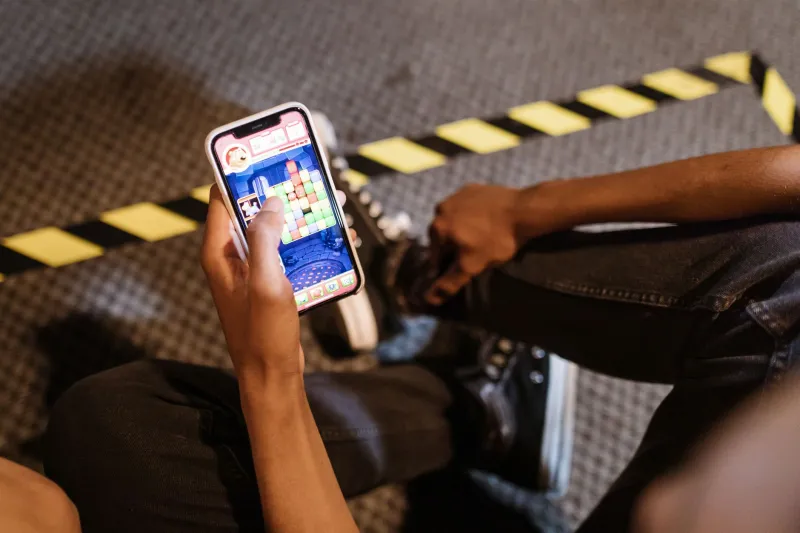
Download it for free. No real money required. Just spin, collect coins, level up, and have fun. That's the pitch from the multibillion-dollar social casino industry — and it's a pitch aimed squarely at people who aren't old enough, or aren't ready, to gamble with actual money.
Social casino games — apps and browser-based platforms that replicate pokies, blackjack, bingo, and poker using virtual currency — have exploded in popularity across Australia over the past decade. You'll find them on the App Store, Google Play, and Facebook. They're free to download, legal for anyone to access, and designed to be played by the widest possible audience.
The problem isn't what they take from players. It's what they quietly install.
What Makes a Social Casino Game Different From Actual Gambling
Legally speaking, the distinction is straightforward: social casino games don't offer real-money prizes. You can't cash out your virtual coins. Under Australia's Interactive Gambling Act 2001, this means they fall outside the regulatory framework that governs licensed online casinos.
In practice, the line is considerably blurrier.
Social casino apps use the same visual design as real pokies — identical spinning reels, identical sound effects, identical win animations. They use the same reward mechanics: near-misses, bonus rounds, free spins, and loyalty systems that reward consistent daily play. They even use the same psychological levers, including variable ratio reinforcement schedules — the same mechanism that makes real slot machines so difficult to walk away from.
The only thing missing is real money. Everything else — the look, the feel, the neurological response — is identical.
How the Brain Gets Trained
This is where child development and addiction researchers start paying close attention.
The brain's reward system doesn't distinguish between a $200 win on a real pokie and a virtual coin jackpot in a free app. Both trigger dopamine release. Both create an associative memory linking the casino environment — the sounds, the visuals, the anticipation — with pleasure and reward. Do this often enough, and you've built a neural pathway.
For adults with fully developed prefrontal cortices, this is concerning enough. For teenagers and pre-teens, whose brains are still in critical developmental phases and are significantly more susceptible to habit formation, the implications are considerably more serious.
Psychologists working in gambling harm reduction have been raising this concern in Australia for several years. The core argument is straightforward: social casino games are conditioning young people to find casino environments comfortable, familiar, and enjoyable — so that when they turn 18 and real-money gambling becomes accessible, the psychological groundwork has already been laid.
It's not that every teenager who plays a social casino game will develop a gambling problem. It's that the exposure normalises the behaviour in ways that aren't visible until much later.
The Regulatory Gap
Australia's gambling laws are, in many respects, among the tighter frameworks in the world. The Interactive Gambling Act prohibits offshore operators from offering real-money casino games to Australian residents. State and territory legislation governs physical venues with considerable rigour.
But social casino apps exist in a gap. Because no real money is wagered, they aren't classified as gambling products. This means:
- There are no age verification requirements
- There are no mandated responsible gaming tools
- There are no advertising restrictions comparable to those applied to real-money gambling
- There is no requirement to display odds, house edges, or any form of consumer information
A 13-year-old in Sydney can download a pokie app, play for hours a day, and encounter no regulatory barrier whatsoever. The app store age rating might say 17+ — but these ratings are self-reported by developers and almost universally unenforced.
Australia's Senate has examined the social casino question in the context of broader gambling reform discussions, but no dedicated legislative action has followed. Consumer advocacy groups, including the Alliance for Gambling Reform, have called for social casino apps to be reclassified and regulated accordingly — so far without success.
The In-App Purchase Pipeline
There's another dimension worth examining: the revenue model.
Most social casino apps are free to download and free to play — up to a point. When a player runs out of virtual coins, they can either wait for a daily refill or purchase more with real money. These microtransaction purchases don't constitute gambling (again, no real-money prizes), but they do create a habit of spending real money within a casino-themed environment.
For young players, this is a meaningful step. It normalises the act of paying to participate in casino-style games. It familiarises them with the friction-reducing mechanics — stored payment details, one-click purchases, 'special offer' prompts — that real-money gambling platforms also use.
Some researchers describe this as a graduated exposure model: free play first, then real-money microtransactions within the free game, then real-money gambling on a licensed platform. Each step feels incremental. None of them feels like a dramatic leap.
What Parents Can Actually Do
If you've got kids or teenagers in your household, here's what's worth knowing and acting on.
Check what's on their devices. Search 'casino,' 'slots,' 'poker,' and 'bingo' in your child's app library. Social casino games are often branded with cheerful, colourful imagery that doesn't immediately read as gambling-adjacent.
Use parental controls on app stores. Both Apple and Google offer content restriction settings that can limit app downloads by age rating. They're not perfect, but they add a meaningful layer of friction.
Disable in-app purchases. Most devices allow you to require a password or biometric confirmation for any in-app purchase. This prevents the microtransaction pipeline from operating automatically.
Have the conversation directly. Teenagers respond better to honest explanations than to unexplained restrictions. Explaining why these apps are designed the way they are — and what they're actually training the brain to do — is more effective than simply removing access.
Watch for warning signs. Significant time spent on social casino apps, frustration when access is removed, and requests for money to buy in-app currency are all worth taking seriously. The Victorian Responsible Gambling Foundation offers resources specifically tailored to young people and families.
The Bigger Picture
The social casino industry is worth an estimated $7 billion globally and growing. Australia is one of its most active markets. The apps are legal, widely available, and — from a purely commercial standpoint — extraordinarily effective at what they do.
What they do, unfortunately, extends well beyond entertainment.
Until Australia's regulatory framework catches up with the reality of how these products work and who is using them, the responsibility sits largely with parents, schools, and players themselves. That's not a satisfying answer. But it's the honest one.
For anyone concerned about a young person's relationship with gambling-style games, the Gambling Help Online service (1800 858 858) provides free support and guidance for families as well as individuals.