Why Your Brain Celebrates Losing: The Neurochemistry Behind Casino Game Design and What It's Doing to Aussie Players
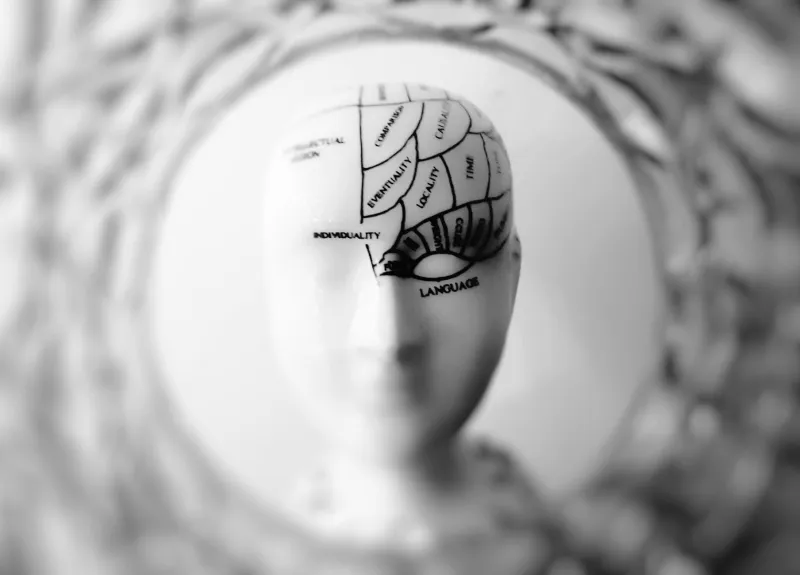
Here's a scenario that will feel familiar to anyone who's spent time on online pokies. You trigger a bonus round, watch the multipliers climb, feel your heart rate tick up — and then the round ends with a payout smaller than what you wagered to get there. You've lost money. And yet, for a moment, you feel energised. Maybe even satisfied.
Logically, that makes no sense. Emotionally, it feels completely real. And the reason it happens has nothing to do with your personality or willpower. It's neurochemistry — specifically, the way dopamine operates in your brain, and the extraordinary sophistication with which modern casino games have been designed to exploit it.
Dopamine Isn't About Pleasure — It's About Anticipation
The popular understanding of dopamine is that it's a 'feel-good' chemical, released when something pleasurable happens. That's a simplification that misses the more important truth: dopamine is primarily a signal of anticipated reward, not the reward itself.
Neuroscientist Wolfram Schultz's foundational research demonstrated this clearly. When a monkey received an unexpected reward, dopamine fired. But once the monkey learned that a signal predicted the reward, the dopamine spike shifted — it fired at the signal, not the reward. When the expected reward didn't arrive, dopamine dropped below baseline. This is the prediction error system, and it's central to how your brain learns.
Now apply that to a pokie machine. Every spin is a signal. The outcome is unknown. That uncertainty — the possibility of a reward — is enough to generate a dopamine response before the reels even stop. You're not reacting to winning; you're reacting to the possibility of winning. The game doesn't need to pay out to keep your dopamine system engaged. It just needs to keep you uncertain.
Near-Misses: The Cruelest Design Feature
Of all the mechanisms game designers use to sustain engagement, the near-miss is arguably the most neurologically potent.
A near-miss occurs when the outcome looks close to a win — two jackpot symbols on the payline and one just above or below, for example. From a mathematical standpoint, a near-miss is simply a loss. The symbols didn't line up; no money was paid. But from a neurological standpoint, a near-miss activates the same brain regions as an actual win.
Studies using fMRI imaging have shown that near-misses trigger activity in the insula and striatum — areas associated with reward processing and the urge to continue — in a way that full losses do not. In plain language: your brain processes "almost winning" similarly to actually winning, which creates a motivation to keep playing that a straightforward loss wouldn't generate.
Game developers know this. The frequency of near-misses in pokie games is not random — it's engineered. Australian players who feel compelled to "keep going because they nearly had it" are experiencing a designed psychological effect, not a rational assessment of their odds.
Why a Losing Session Can Feel Better Than a Winning One
This is the counterintuitive phenomenon at the core of the dopamine debt concept: players often report feeling more stimulated, more engaged, and paradoxically more satisfied after a volatile losing session than after a session where they won steadily and walked away.
The explanation lies in how dopamine responds to variability. A steady, predictable stream of small wins produces a flat dopamine curve — pleasant enough, but not compelling. A volatile session full of near-misses, bonus triggers, big swings, and eventually losses produces a jagged, high-amplitude dopamine curve. The peaks are higher. The brain encodes that experience as more significant than the quiet winning session.
This is why players describe chasing losses as feeling urgent and alive, while walking away with a profit can feel anticlimactic. The winning session didn't generate enough dopamine drama. The losing session, perversely, felt like more of an event.
The debt part of the equation comes later. After a highly stimulating session, dopamine levels drop below baseline — the brain's way of recalibrating. This deficit creates a low-level craving to return to the stimulus that caused the spike. It's not addiction in the clinical sense for most players, but it is a neurochemical pull that casual gamblers rarely recognise for what it is.
How Game Design Weaponises These Mechanisms
Modern online pokies are not passive games. They're interactive dopamine delivery systems, and the production budgets behind them reflect that.
Sound design: Wins are accompanied by ascending tones, celebratory jingles, coin sounds. Losses are met with silence or neutral audio. The asymmetry trains your brain to associate play with positive sound, even when the net result is negative. Some games even play win sounds for payouts smaller than the triggering bet — you've lost money, but your ears hear a celebration.
Visual feedback: Cascading symbols, expanding wilds, screen-filling animations. Each visual event creates a micro-moment of anticipation. The game is constantly presenting signals that pattern-matching brains interpret as potential reward cues.
Bonus round architecture: Bonus rounds are engineered to be highly variable — sometimes massive, sometimes negligible. That variability is the point. The unpredictability of the bonus outcome generates a dopamine spike the moment it's triggered, regardless of what it eventually pays. Players often remember the excitement of triggering a bonus more vividly than the actual payout, which is why they keep chasing the trigger.
Loss disguised as wins (LDWs): A bet of $1.00 that returns $0.40 is accompanied by the same celebratory sounds as a genuine win. In Australian pokies research, LDWs have been identified as a significant contributor to distorted player perception of their actual win rate.
Recognising When Your Brain Is Being Managed
Knowing this doesn't make you immune to it — the effects are neurological, not intellectual. But awareness does create a small but meaningful gap between stimulus and response. Here are some practical questions to ask yourself during a session:
- Am I still playing because I'm enjoying this, or because I feel like something is about to happen? The second feeling is often dopamine anticipation, not genuine entertainment.
- Would I describe this session as fun if I wrote it down honestly? Excitement and enjoyment are different things. High-stress, high-volatility sessions can be exciting without being enjoyable.
- How do I feel right now compared to when I started? If the answer is more agitated, more urgent, or less relaxed, your neurochemistry is driving the session rather than your preferences.
- Am I replaying moments from the session in my head? Vivid memory encoding of gambling events is a sign of significant dopamine involvement and a precursor to craving.
None of this means online casino games can't be enjoyed responsibly. But 'responsibly' requires understanding what the game is actually doing to your brain — not just what it looks like on screen.
If you find that these patterns feel uncomfortably familiar, the Gambling Help Online service (gamblinghelponline.org.au) offers free chat support from trained counsellors who understand exactly these kinds of experiences.


